Researching your options before making a big purchase helps you feel secure about the item you choose; you wouldn’t buy the first laptop you see at Dakota PC Warehouse without considering the alternatives. For people with hearing loss, that research may help you choose between over-the-counter (OTC) and prescription hearing aids.
Comparing OTC and Prescription Hearing Aids
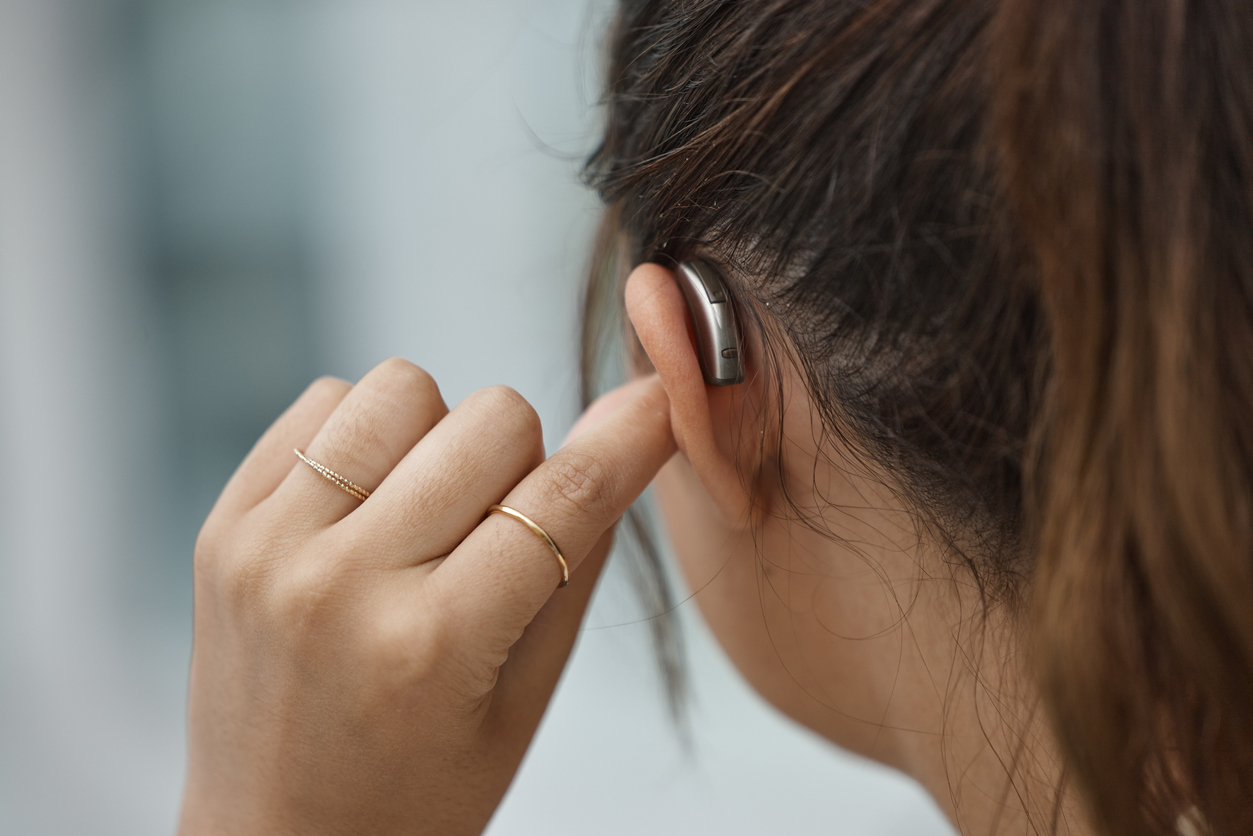
OTC hearing aids are the kinds you get online or through big box retail stores. Because they’re not prescription, OTC hearing aids will come in standard sizes and without tailored hearing profiles; you will need to adjust the settings on your own.
Prescription hearing aids are any devices dispensed by licensed hearing care clinics. Prescription hearing aids are specifically programmed to match your hearing profile and often custom-fit to your ear shape for greater comfort. In addition to the initial fitting, prescription hearing aids come with follow-up care to ensure your devices continue to meet your needs.
A 2025 clinical trial consisting of 245 participants examined the benefits of prescription and OTC hearing aids. The study found that OTC hearing aids provided measurable amplification benefits, but the overall patient satisfaction was higher among patients who received prescription devices and follow-up care.[1]
How Personalized Hearing Aids Benefit You
Take two hypothetical patients: Patient A has severe hearing loss and tinnitus, and Patient B has mild hearing loss and no tinnitus. Patient A will require hearing aids with greater amplification than Patient B. Patient A will also benefit from devices with a tinnitus-masking feature. Patient B has a few more style choices because their hearing loss isn’t as advanced.
Giving Patient A the same hearing aid and volume settings as Patient B will mean they aren’t getting the amplification or features they need. Prescription hearing aids counteract this by matching each patient’s needs.
The Perks of Follow-Up Care
One of the biggest benefits of prescription hearing aids is the built-in follow-up care. Our experts at Ear, Nose & Throat Consultants can clean your devices and check their programming to ensure they continue to meet your needs.
If you have any additional questions about your hearing aid options, reach out to Ear, Nose & Throat Consultants today.
[1] Wu, Y., Stangl, E., Branscome, K., Oleson, J., & Ricketts, T. (2025). Hearing aid service models, technology, and patient outcomes: A randomized clinical trial. JAMA Otolaryngology–Head & Neck Surgery, 151(7), 684–692. https://doi.org/10.1001/jamaoto.2025.1008