It’s reported that 37.5 million American adults, or 15% of the entire American population, have some difficulty hearing. Hearing loss can affect people of any age and has numerous possible causes. There are three basic categories of hearing loss: conductive hearing loss, sensorineural hearing loss and mixed hearing loss. Which type you have will depend on what caused your hearing loss.
How We Hear
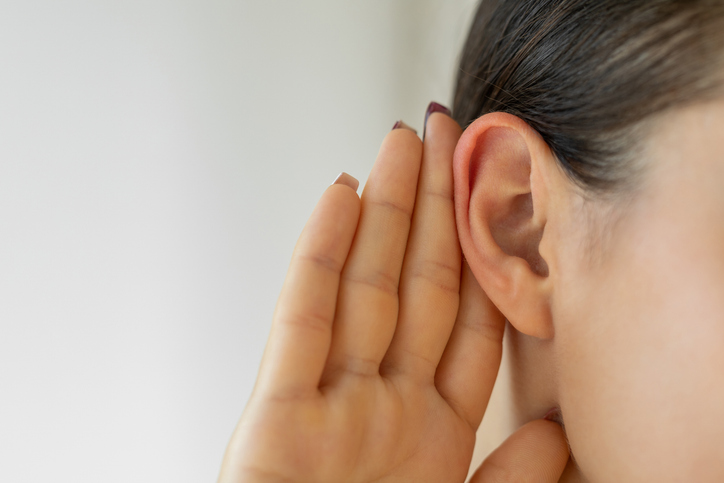
First, let’s discuss how hearing works. A sound wave goes through several steps before we hear it. A sound wave travels down the ear canal to strike the eardrum. The eardrum vibrates with the force of the sound wave and amplifies the vibrations into the middle ear, which then conducts those vibrations into an organ called the cochlea. The cochlea is filled with fluid and lined with microscopic hair-like sensory cells. These cells ripple in the fluid in response to the vibrations, and this action converts the vibrations into electrical signals. Those electrical signals are transmitted to the brain, which is where you—at last—hear the sound.
Conductive Hearing Loss
Conductive hearing loss occurs when there is some damage, blockage or other dysfunction somewhere in the ear canal, eardrum or middle ear. These dysfunctions prevent sound waves from ever reaching the cochlea, typically leading to muffled or distorted hearing.
Potential Causes of Conductive Hearing Loss
- Impacted earwax in the ear canal
- Foreign object lodged in ear canal
- Perforated eardrum
- Ear infection (otitis media or otitis externa, also called “swimmer’s ear”)
- Fluid buildup in the middle ear
- Bone abnormality
- Ear tumor
- Trauma or injury
Sensorineural Hearing Loss
Sensorineural hearing loss, or SNHL, is the more common type of hearing loss, and it occurs when there’s damage or deterioration in the last half of the hearing process, in the cochlea or auditory nerve. This type of hearing loss generally manifests as difficulty hearing certain pitches, particularly high-pitched sounds.
Potential Causes of Sensorineural Hearing Loss
- Aging (presbycusis)
- Loud noise exposure
- Some medications, known as ototoxic medications
- Disease
- Some autoimmune disorders
- Other health conditions, such as hypertension or diabetes
Mixed Hearing Loss
As the name suggests, mixed hearing loss is a combination of conductive and sensorineural hearing damage. In this case, the issue compounds and makes hearing worse than it would be with only one problem.
Treating Hearing Loss
How you treat your hearing loss will depend on what type of hearing loss you have, which can be determined by a professional hearing test. In the case of conductive hearing loss, sometimes surgery is needed to remove a blockage, such as a tumor, or correct bone structure, as in otosclerosis. Other times, a hearing device like a cochlear implant or bone-anchored hearing device is used to bypass the damaged outer or middle ear and conduct sound straight to the cochlea. Treating sensorineural hearing loss typically requires hearing aids. Treatment for mixed hearing loss will depend on what factors led to the hearing loss.
If you’re interested in a hearing test to determine what type of hearing loss you have, or if you have any further questions about how we hear, please reach out to Ear, Nose & Throat Consultants.